All posts
Every guide, research report and product announcement from Infini.
67 postsHow Do Payment Gateways Work?
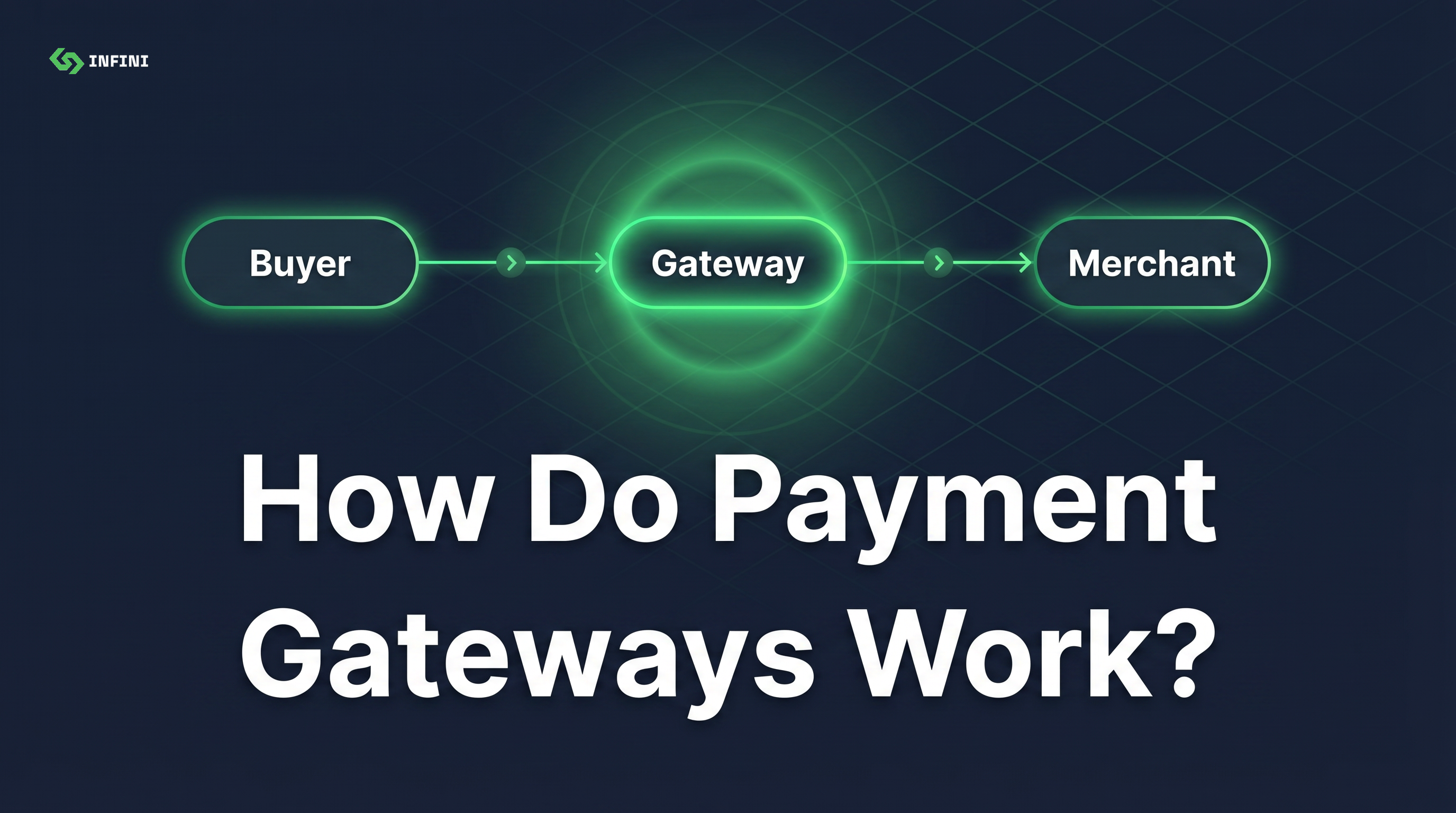
Bottom Line Up Front: A payment gateway is the digital equivalent of a physical point-of-sale terminal. It securely captures a customer's payment data, encrypts it, and transmits it through a series of steps—authorization, authentication, clearing, and settlement—to move funds from the customer's bank to the merchant's account. For global businesses, choosing the right gateway means balancing transaction fees,…
What Are the AML/KYC Requirements for Crypto Payment Gateways?
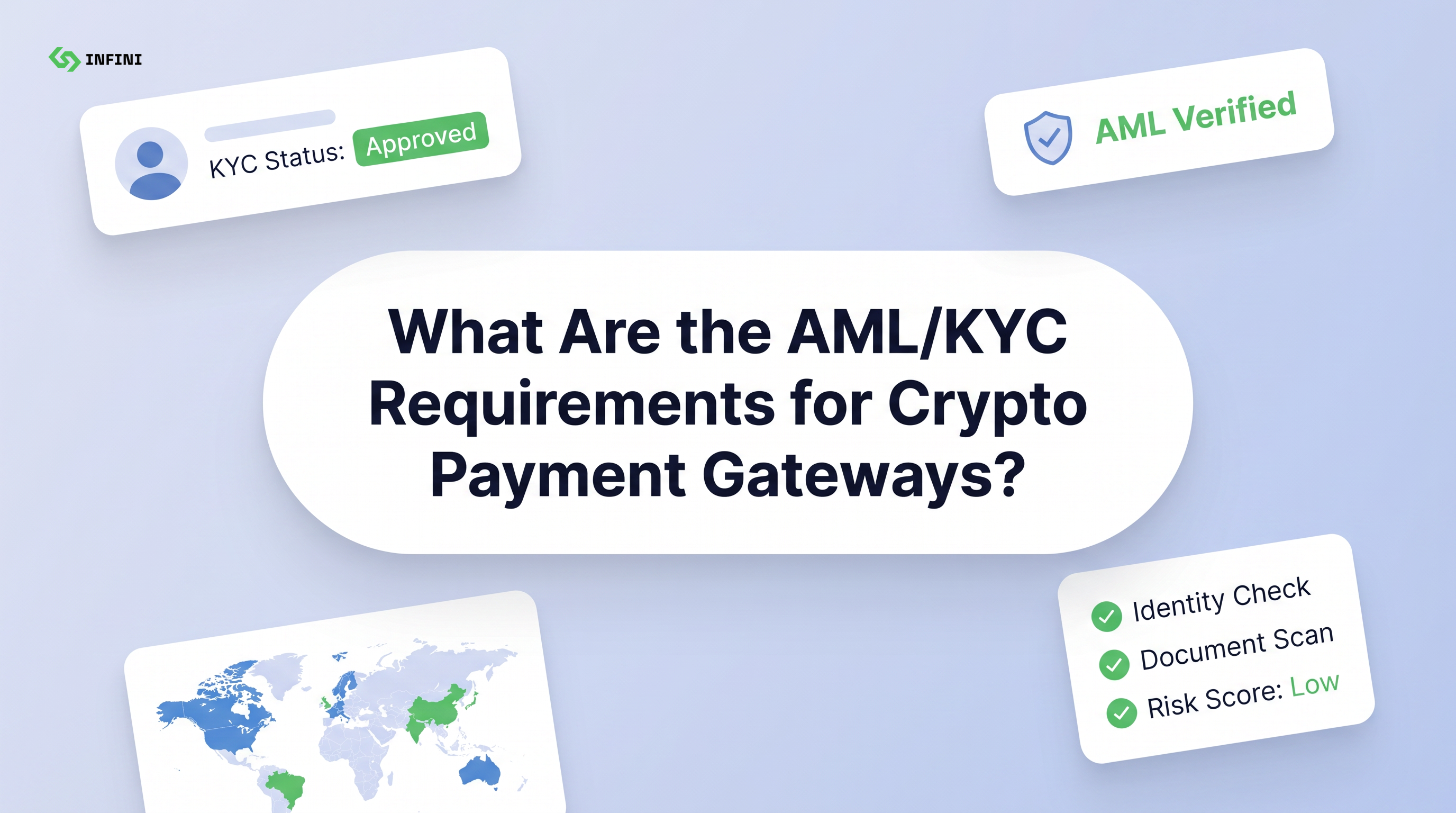
The short answer is that crypto payment gateways must comply with strict Anti-Money Laundering (AML) and Know Your Customer (KYC) regulations, primarily driven by the FATF Travel Rule, the US FinCEN Bank Secrecy Act (BSA), and the EU's Markets in Crypto-Assets (MiCA) regulation. These frameworks require gateways to verify user identities, monitor transactions for suspicious activities, and report to authorities when…
Why Your B2B Business Should Accept Stablecoin Payments
Bottom line upfront: If your B2B company moves money across borders, stablecoin payments can cut your transaction costs by up to 80%, settle in minutes instead of days, and free working capital that is currently trapped in correspondent-banking queues. Our 12-person finance and operations team spent over a month benchmarking payment rails before concluding that stablecoins deliver the strongest combination of speed,…
How to Reduce Cross-Border Payment Fees with Crypto
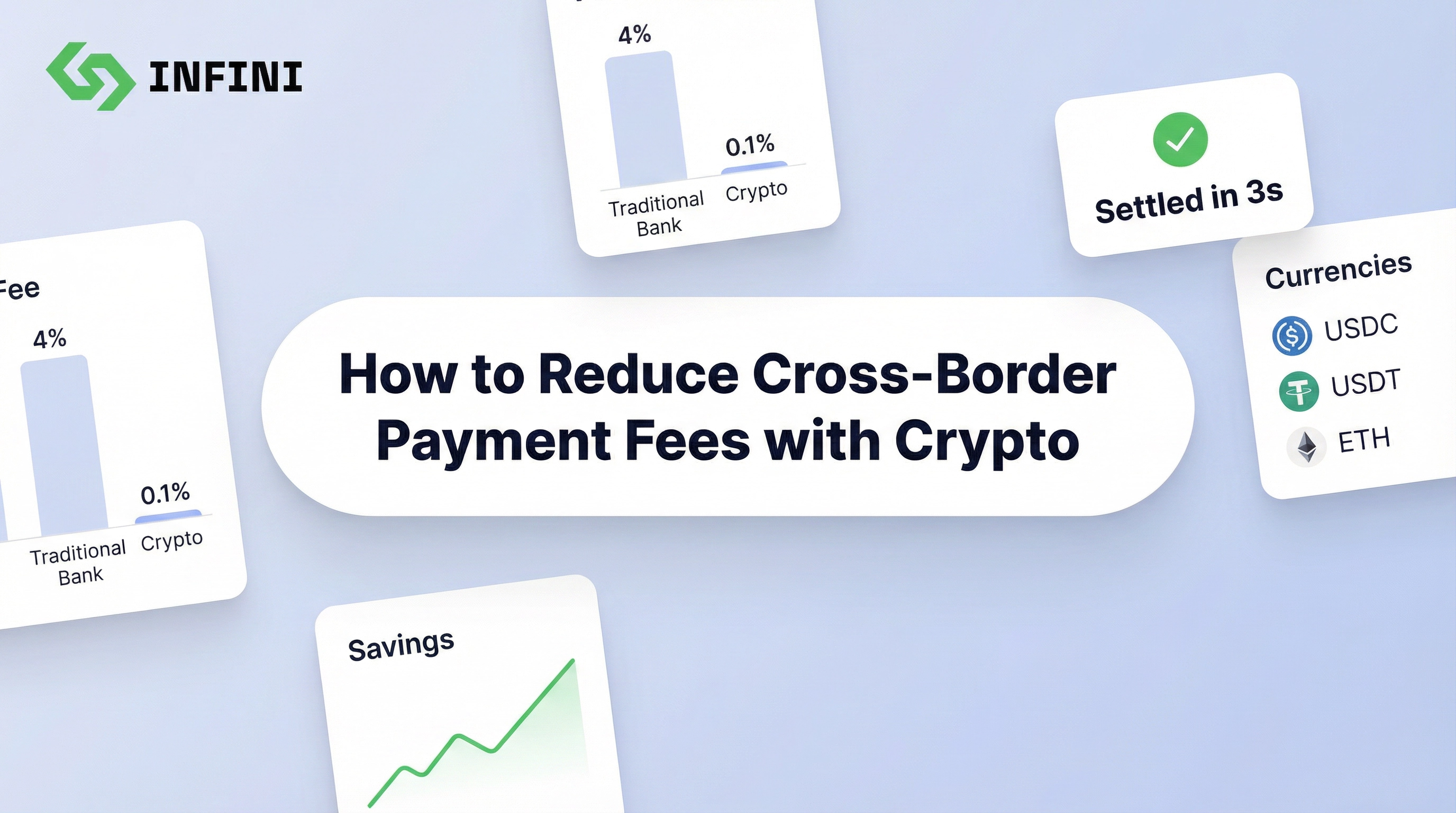
Answer First: You can reduce cross-border payment fees by up to 90% by switching from traditional SWIFT wire transfers to stablecoin payments (like USDC or USDT) on blockchain networks. While traditional banks charge 2-5% in hidden FX markups and intermediary fees, crypto payments typically cost under 0.5% and settle in minutes rather than days. For businesses, adopting a "fiat + stablecoin" dual-track architecture…
What Is a Crypto Payment Gateway
A crypto payment gateway is a digital payment processor that allows businesses to accept cryptocurrencies like Bitcoin, Ethereum, and stablecoins (such as USDC or USDT) at checkout. It acts as a bridge between a customer's crypto wallet and a merchant's bank account, automatically converting digital assets into fiat currency (like USD or EUR) to protect the business from price volatility. If your business settles…
What Is a Crypto Payment Gateway for eCommerce?
Our team recently spoke with an eCommerce merchant who was losing 3% of their revenue to cross-border transaction fees and dealing with weeks of delayed settlements. They asked us a simple question: "Is a crypto payment gateway actually worth the switch?" The short answer is yes. A crypto payment gateway allows your online store to accept digital currencies like Bitcoin and stablecoins, drastically reducing fees,…
What is a Crypto Payment Gateway? The Ultimate Guide for Global Businesses
Answer First (BLUF): A crypto payment gateway is a digital transaction facilitator that enables businesses to accept cryptocurrency payments seamlessly. It acts as a bridge between customers paying with digital assets and merchants receiving funds, often automatically converting crypto into fiat currency to eliminate price volatility. For modern global businesses, it offers a faster, cheaper, and more secure…
INFINI Business Beta Launch: A New Stablecoin Finance OS for Global SMEs and Founders
Traditional payment rails were never designed for a world where: On paper, globalisation and remote work “opened the world.” In practice, most of those flows still ride SWIFT, card schemes, and stacked PSPs—each taking time and margin along the way. Cross-border payments for SMEs often cost 3–8% all-in once FX spreads, correspondent bank charges, and platform markups are included. At the same time, stablecoin…

Infini Global | Global Payments & Stablecoin Ecosystem 2026: Strategic Outlook & Key Findings
As we approach 2026, the global financial landscape is undergoing a structural transformation characterized by the institutionalization of stablecoins. The experimental phase of 2020–2024 has concluded, replaced by a regulated, bank-driven era of digital settlement. Our comprehensive analysis of the current market (December 2025) reveals three dominant themes that will define the payment industry over the next 12 to…

Infini Course | Stablecoin vs. Credit Card: The Future of Business Payments in 2025
For the last half-century, the global economy has run on financial rails built in the 1960s. The "Four-Party Model" of credit card processing — involving the Merchant, Acquirer, Network, and Issuer — brought ubiquity to commerce, but it came at a staggering price. In 2024 alone, businesses lost an estimated $120 billion to cross-border transaction fees, foreign exchange (FX) markups, and interchange levies. We are…

Infini View | The 2025 Imperative: Stablecoin payment Acquiring & The Rise of Pay-Fi
The debate over whether digital assets are a legitimate financial instrument has been settled not by pundits, but by volume. As we navigate late 2025, on-chain stablecoin settlement volumes now rival major credit card networks. Stablecoin payment trends have graduated from a niche alternative payment method to a fundamental pillar of modern financial infrastructure. For the C-Suite executive, the imperative is no…

Infini View | The Paradigm Shift of Payment Giants — A Deep Dive into Visa and Mastercard’s Stablecoin Strategy
The global payments system is undergoing a quiet yet profound transformation. For decades, cross-border remittances have been plagued by high costs, lengthy settlement cycles, and a web of intermediaries — pain points deeply embedded in the financial infrastructure. The emergence of blockchain and stablecoins offered, for the first time, a faster, cheaper, and more transparent way to move value across borders. As…